
Top 10 Industrial Areas in Karnataka for PEB Construction 2026

Introduction
Karnataka is one of South India’s most industrially diverse states. Bengaluru drives technology and precision manufacturing. Mysuru anchors tourism and agri-processing. Hubli-Dharwad serves the northern Karnataka and Maharashtra border trade. Mangaluru connects the port economy. Belagavi hosts cross-border industrial activity. Tumakuru is emerging as Bengaluru’s satellite industrial corridor.
Each city presents a different combination of land cost, logistics infrastructure, workforce availability, and industrial policy support. For businesses planning a factory, warehouse, or industrial facility in Karnataka, the location decision shapes construction cost, operational cost, and long-term facility performance as much as the structure itself.
For businesses evaluating pre-engineered steel buildings in Karnataka, this guide compares six major industrial cities across the factors that matter most before any site commitment is made.
Why Location Matters for PEB Factory Construction in Karnataka
Before looking at individual cities, understanding what drives location-based cost and performance differences helps you evaluate each option with the right criteria.
Road connectivity shapes both inbound raw material cost and outbound distribution cost. National highway access, proximity to rail freight yards, and port access for import-export operations each matter differently depending on your industry.
Power availability determines what operations are viable. Karnataka has developed strong power infrastructure in established industrial zones but reliability varies between mature zones and newer development corridors. Energy-intensive manufacturing, cold chain facilities, and precision production environments need verified power supply before site selection is finalised.
Land acquisition cost is the most visible variable but not always the most significant one. A lower land cost in an emerging corridor can be offset by higher logistics cost if your supply chain is strongly oriented toward Bengaluru or the port. The right balance depends on what your facility ships and receives, not just what the land costs.
Workforce skill profiles differ substantially between Karnataka cities. Bengaluru and Mysuru have deep engineering and technical talent pools. Hubli and Belagavi draw on different industrial skill sets shaped by their regional economies. Matching the workforce profile to your operational requirement saves recruitment cost and time-to-operational-readiness.
1. Bengaluru: Technology-Adjacent Industrial Hub
Bengaluru is Karnataka’s industrial capital and one of South India’s most active markets for factory and warehouse construction. The city’s technology economy has created consistent demand for precision manufacturing, electronics assembly, pharma production, and high-value logistics infrastructure alongside its IT sector.
Key industrial zones: Peenya Industrial Area, Bommasandra, Electronic City Phase II, Bidadi, Nelamangala, Whitefield industrial corridors.
Key advantages:
- Largest skilled and semi-skilled workforce pool in Karnataka
- Strong vendor and ancillary ecosystem across engineering sectors
- KIADB industrial zones with established infrastructure
- Proximity to Kempegowda International Airport for air cargo
- National highway connectivity in multiple directions
- Active demand for warehousing from e-commerce and FMCG sectors
Ideal for: Precision manufacturing, electronics assembly, pharma and medical devices, e-commerce and FMCG distribution, technology-adjacent production facilities.
Cost consideration: Bengaluru carries the highest industrial land cost in Karnataka. Established zones like Peenya and Bommasandra command significant premiums. Businesses requiring large footprints typically look at peripheral corridors including Nelamangala, Bidadi, and the Tumakuru NH corridor where land costs reduce substantially while NH connectivity is retained.
Construction consideration: High-value industry in Bengaluru frequently requires factory buildings with controlled environments, clean room capabilities, and premium finishing standards. Pre-engineered steel buildings with insulated sandwich panel cladding, precision floor flatness, and architecturally considered exteriors suit these requirements while delivering the construction speed that RCC construction cannot match.
2. Mysuru: Agri-Processing and Manufacturing Base
Mysuru is Karnataka’s second-largest city and a well-established industrial centre with a character distinct from Bengaluru. Its economy combines manufacturing, food and agri-processing, textiles, chemicals, and a growing IT presence. The Mysuru-Bengaluru NH corridor is one of Karnataka’s most active industrial development axes.
Key industrial zones: Hebbal Industrial Area, KIADB Industrial Area Hootagalli, Belavadi, Yelwala, and the NH 275 corridor toward Bengaluru.
Key advantages:
- Lower land cost compared to Bengaluru with strong NH connectivity
- Established agri-processing and food industry ecosystem
- Good workforce availability across manufacturing categories
- KIADB industrial zones with reliable infrastructure
- Proximity to Bengaluru market (under 3 hours on NH 275)
- Growing logistics and warehousing activity along the corridor
Ideal for: Food and agri-processing, textiles, chemical manufacturing, logistics serving Bengaluru from lower-cost base, light engineering.
Cost consideration: Land in Mysuru’s established industrial zones is substantially lower than equivalent Bengaluru zones. The NH 275 corridor toward Bengaluru offers growing plot availability with strong connectivity at costs that compare favourably to anything within the Bengaluru metropolitan boundary.
Construction consideration: Food and agri-processing facilities in Mysuru require warehouse and production buildings with specific hygiene considerations in the interior specification. Wide clear-span PEB structures with seamless floor systems, ridge ventilators, and coated interior cladding surfaces suit these requirements well.
3. Hubli-Dharwad: North Karnataka Industrial Centre
Hubli-Dharwad is the commercial and industrial capital of northern Karnataka. Its twin-city structure combines Hubli’s trading and logistics strength with Dharwad’s educational and administrative functions. The city is a significant rail junction connecting Mumbai, Bengaluru, Goa, and Hyderabad, which gives it multimodal logistics advantages that few other Karnataka cities match.
Key industrial zones: KIADB Industrial Area Tarihal, Belur, Gokul Road corridor, and the NH 67 logistics corridor.
Key advantages:
- Major rail junction with connectivity to multiple metro markets
- Growing logistics and warehousing demand from North Karnataka trade
- Land costs well below Bengaluru and Mysuru
- Industrial workforce with manufacturing and trade skills
- Proximity to Goa and Maharashtra border markets
- Government industrial development support for North Karnataka
Ideal for: Logistics and distribution warehousing, agri-commodity storage, building materials and construction products, light manufacturing serving North Karnataka and Goa corridor.
Cost consideration: Hubli-Dharwad offers among the most competitive industrial land costs in Karnataka among major cities. Businesses serving North Karnataka, Goa, and southern Maharashtra markets can reduce logistics cost significantly by positioning a distribution facility here rather than operating from Bengaluru.
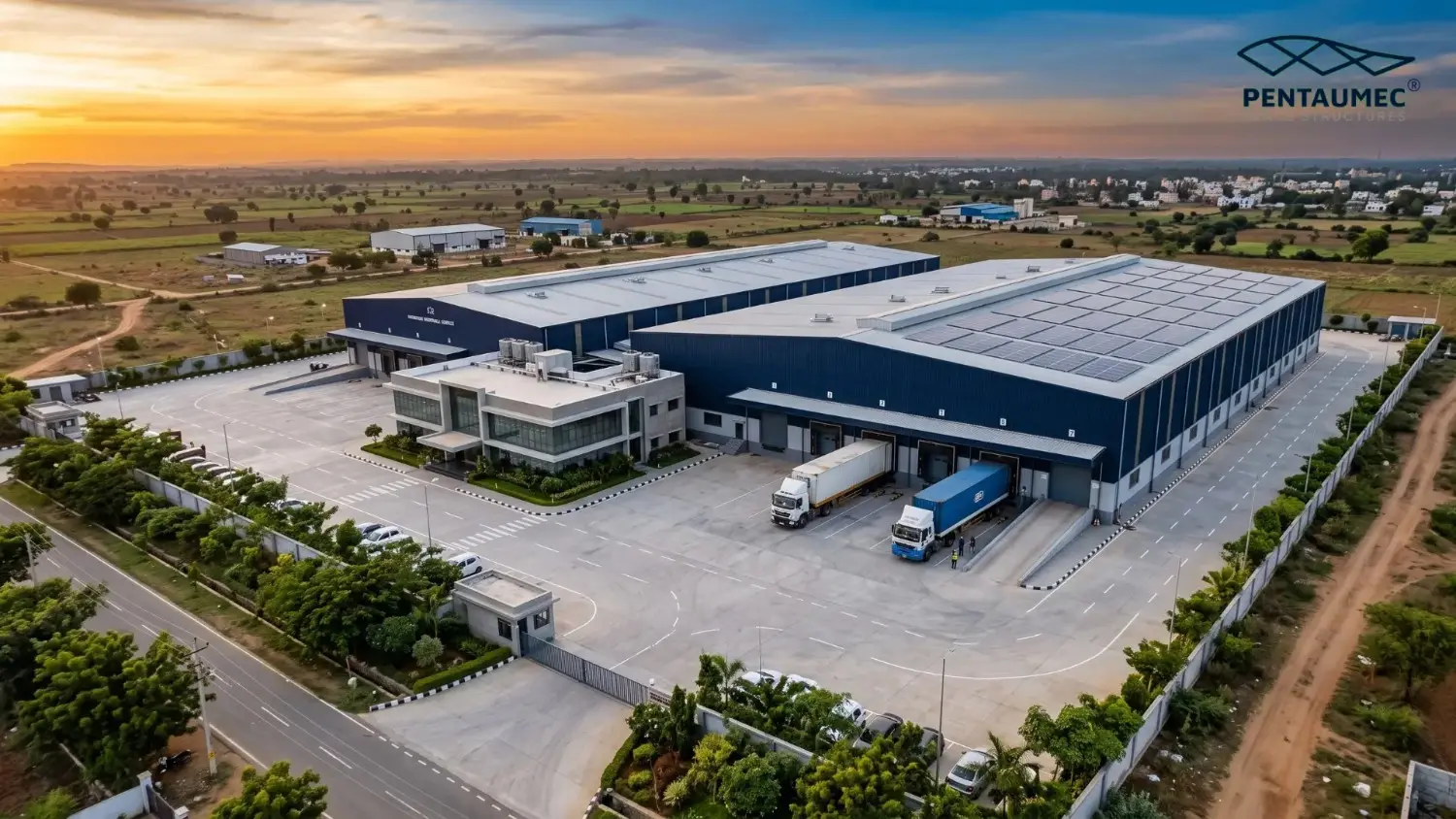
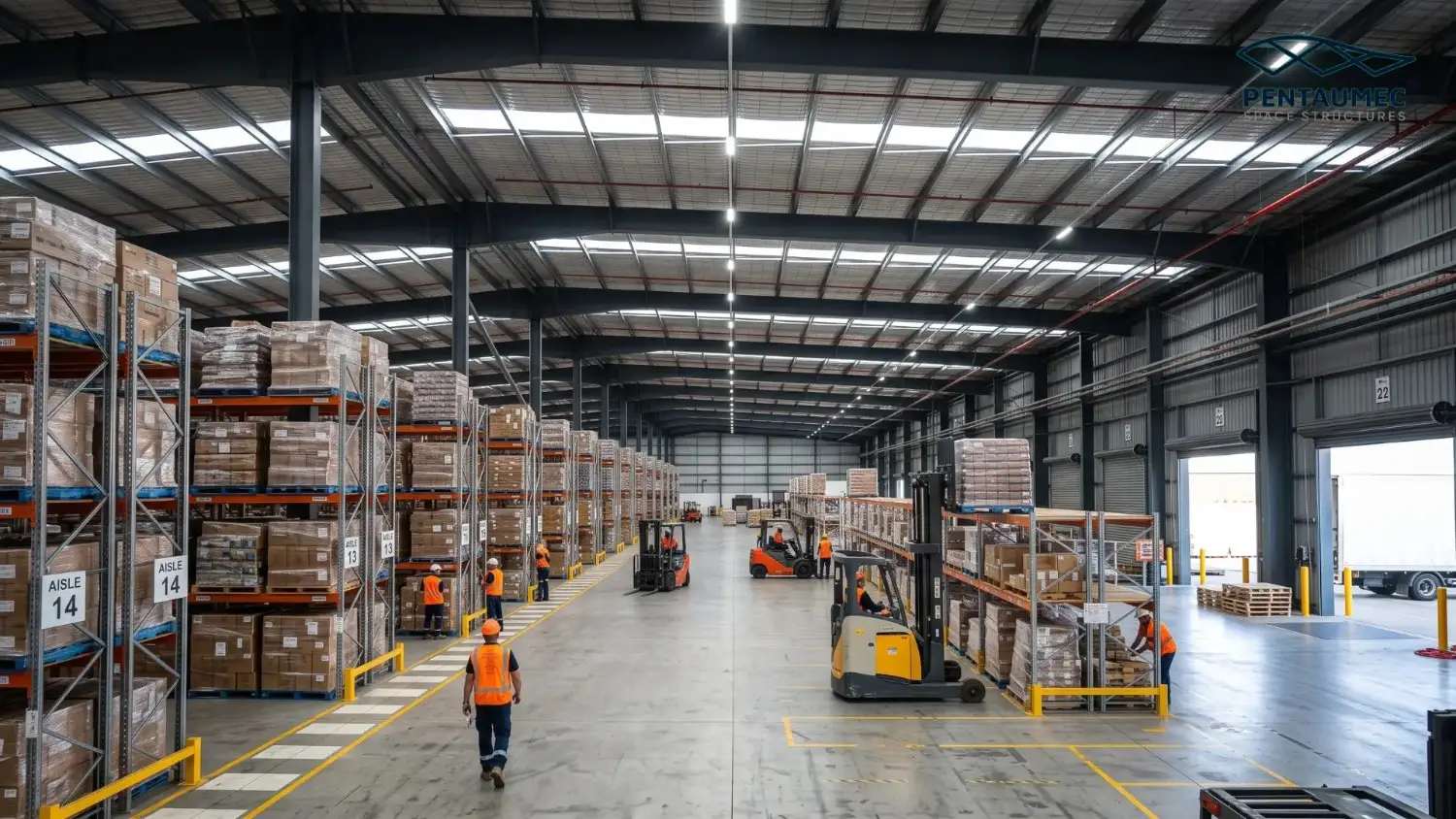
Construction consideration: Logistics and distribution facilities dominate the construction demand here. Wide clear-span warehouses with multiple loading bays, high eave heights for racking systems, and fast construction timelines are the consistent requirement. Pre-engineered steel building construction in Karnataka is the standard approach for these project types across the Hubli-Dharwad zone.
4. Mangaluru: Port-Connected Coastal Industrial Base
Mangaluru is Karnataka’s port city and the primary coastal industrial centre for the state. New Mangalore Port, one of India’s major ports on the western coast, gives the city an import-export logistics advantage that no other Karnataka city can offer. The port handles petroleum, fertilisers, iron ore, and containerised cargo, creating consistent industrial demand around its hinterland.
Key industrial zones: KIADB Baikampady Industrial Area, Moodbidri, Bantwal, and the NH 66 coastal corridor.
Key advantages:
- New Mangalore Port for import-export and coastal shipping
- Established chemical, fertiliser, and petroleum-related industry base
- Strong fishing and seafood processing sector
- Growing commercial and logistics activity along NH 66
- Proximity to Goa and Kerala coastal corridor
- Airport connectivity for air freight
Ideal for: Import-export oriented warehousing, chemical and fertiliser-related industry, seafood processing and cold chain storage, port-adjacent logistics, coastal commodity handling.
Cost consideration: Industrial land in Mangaluru’s established zones is competitive with Mysuru. Coastal location means enhanced corrosion protection specifications are required for most warehouse and factory buildings within a defined coastal zone, adding 8 to 12 percent to structural cost compared to equivalent inland specifications.
Construction consideration: Coastal atmospheric exposure in Mangaluru requires specific steel building specification. Marine-grade primer systems, hot-dip galvanized secondary members, and corrosion-resistant fasteners are engineering requirements for buildings within the coastal zone, not optional upgrades. PEB structures designed with coastal specifications from the first engineering stage rather than added as afterthoughts perform reliably over 25 to 30 year service lives without major remediation costs.
5. Belagavi: Cross-Border Industrial Gateway
Belagavi sits at Karnataka’s northern border with Maharashtra and Goa, giving it a natural advantage as a cross-border industrial and logistics location. The city has a long manufacturing history across engineering, auto components, and sugar processing, supported by a dense industrial ecosystem in the surrounding district.
Key industrial zones: KIADB Industrial Area Udyambag, Macche, Angol, and the NH 48 corridor toward Pune.
Key advantages:
- Cross-border connectivity to Maharashtra and Goa markets
- Established engineering and auto-component manufacturing base
- Lower land costs compared to Bengaluru and Mysuru
- Rail and road connectivity via NH 48 toward Pune-Mumbai corridor
- Strong contractor and ancillary ecosystem
- Growing demand for logistics infrastructure serving cross-border trade
Ideal for: Auto component manufacturing, engineering goods production, cross-border logistics and distribution, agri-processing, cold chain serving northern Karnataka.
Cost consideration: Land costs in Belagavi are competitive with Hubli-Dharwad and significantly below Bengaluru. Businesses with supply chains oriented toward Maharashtra benefit from shorter logistics distances for inbound and outbound movements compared to operating from Bengaluru.
Construction consideration: Engineering and auto-component manufacturing facilities in Belagavi commonly require crane provisions within the factory structure. PEB buildings with integrated overhead crane runway beams, reinforced column designs, and upgraded foundation specifications for crane loads are a consistent requirement across this zone.
6. Tumakuru: Bengaluru’s Industrial Satellite Corridor
Tumakuru has emerged as one of Karnataka’s most strategically positioned industrial locations for businesses that need Bengaluru proximity without Bengaluru land costs. Located on NH 48 between Bengaluru and Hubballi, it sits within 70 kilometres of Bengaluru and benefits from improving road infrastructure that reduces effective travel time further.
Key industrial zones: KIADB Tumakuru Industrial Area, Tiptur corridor, and the NH 48 logistics strip.
Key advantages:
- 70 kilometres from Bengaluru on NH 48
- Substantially lower land acquisition cost than Bengaluru zones
- KIADB industrial zone with government-backed infrastructure
- Growing warehousing and manufacturing investment
- Proximity to Bengaluru workforce and vendor ecosystem
- Future metro connectivity planning adding long-term value
Ideal for: Bengaluru-market-serving warehousing and distribution, light manufacturing, agri-processing, logistics facilities, industries relocating from Bengaluru due to land cost pressure.
Cost consideration: Tumakuru consistently offers industrial land at 40 to 60 percent lower cost than comparable Bengaluru peripheral zones. For businesses whose primary market is Bengaluru, this cost reduction without significant logistics penalty makes Tumakuru one of the most financially compelling locations in Karnataka.
Construction consideration: The Tumakuru corridor sees strong demand for fast-track warehouse and factory construction. Businesses relocating from Bengaluru or setting up Bengaluru-serving distribution centres need operational buildings quickly. PEB construction in Karnataka delivers operational buildings in 45 to 135 working days depending on project scale, substantially faster than RCC construction for equivalent facilities.
How to Match Your Supply Chain to the Right Karnataka City
Selecting among Karnataka’s industrial cities requires matching location characteristics to your operational requirements, not picking the most prominent name on the map.
Port and import-export operations: Mangaluru is the clear choice. No other Karnataka city offers direct port access.
Rail freight advantage: Hubli-Dharwad and Belagavi both offer strong rail connectivity to multiple markets. For businesses where rail freight is a primary logistics mode, these cities reduce inbound and outbound transport cost meaningfully.
Bengaluru proximity at lower cost: Tumakuru and the Nelamangala-Bidadi belt offer the best combination of NH 48 connectivity with reduced land acquisition cost.
Cross-border supply chains to Maharashtra and Goa: Belagavi positions your facility closest to those markets from within Karnataka, reducing logistics cost for movements in those directions.
Agri-processing and food industry: Mysuru and its NH 275 corridor have the deepest ecosystem of food processing infrastructure, supplier networks, and relevant workforce skills.
Pentaumec Space Structures has delivered factory and warehouse construction projects across Karnataka’s major industrial cities. Site-specific experience across these locations helps businesses make construction decisions suited to local ground conditions, climate requirements, and operational layouts before any fabrication commitment is made.
PEB Construction Across Karnataka’s Industrial Cities
Pre-engineered steel buildings have become the standard warehouse and factory construction method across Karnataka’s industrial zones for reasons consistent with their performance across South India.
Construction speed allows businesses to begin operations significantly faster than conventional RCC construction. In competitive industrial markets where lease or operational commitments drive timelines, faster construction handover has measurable financial value.
Cost efficiency through optimised structural design reduces both material quantities and total construction budget for equivalent floor area. Steel efficiency in PEB design comes from engineering the structure for the actual loads it carries rather than applying standard conservative sections regardless of what the building needs.
Climate performance across Karnataka’s varied conditions, from Bengaluru’s moderate climate to Mangaluru’s coastal atmosphere and Hubli’s drier northern Karnataka environment, is addressed through appropriate specification rather than a one-size approach. Steel structures with the right surface preparation and cladding specification perform reliably across all of these environments.
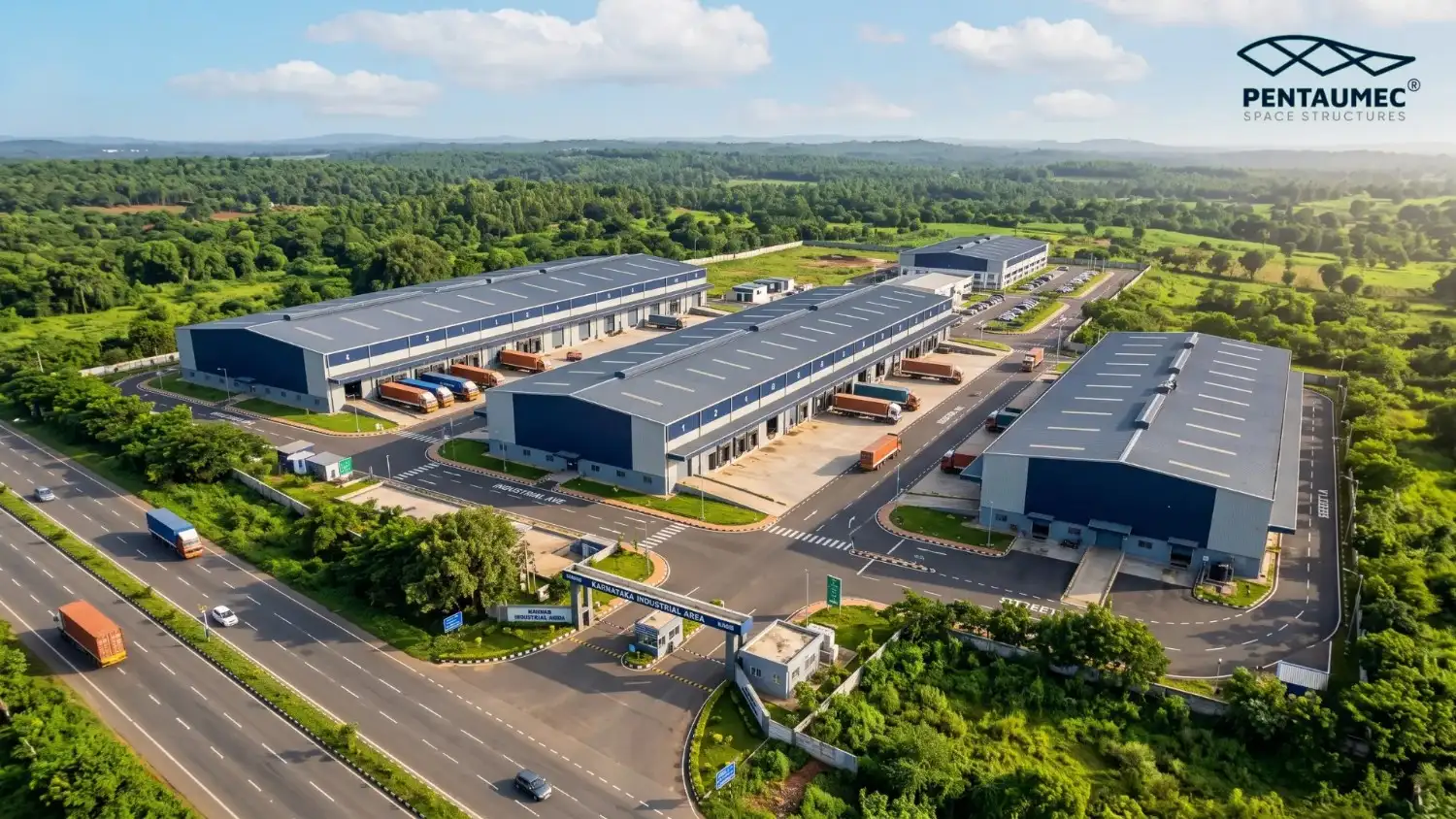
Across all six cities covered in this guide, pre-engineered steel building construction has delivered consistent results for manufacturing, logistics, warehousing, and commercial facility development.
Conclusion
Karnataka’s industrial geography offers genuinely diverse options for businesses planning factory or warehouse construction in 2026. From Bengaluru’s technology-driven industrial ecosystem to Mangaluru’s port-connected coastal base, and from Mysuru’s agri-processing strength to Tumakuru’s emerging Bengaluru-satellite advantage, each city presents specific strengths tied to particular supply chain models.
Understanding these differences before committing to a site saves both capital and operational cost. The building that suits a Bengaluru precision manufacturing facility has different specifications from the one that suits a Hubli logistics warehouse or a Mangaluru coastal storage facility. Getting that match right from the first design brief prevents the compromises that emerge when a standard specification is applied to a non-standard operational requirement.
For businesses planning warehouse or factory construction across any of Karnataka’s industrial cities, pre-engineered steel building systems deliver the construction speed, structural performance, and specification flexibility that modern industrial operations require.
Pentaumec Space Structures brings 12 plus years of factory and warehouse construction experience across Karnataka, Tamil Nadu, and Kerala. Our team understands the site-specific requirements of each industrial zone and designs steel structures that perform reliably from day one of operations.
Contact us today: +91 90475 33833 | info@pentaumec.in | pentaumec.in