
23 Questions About PEB Construction Answered by Engineers
Introduction
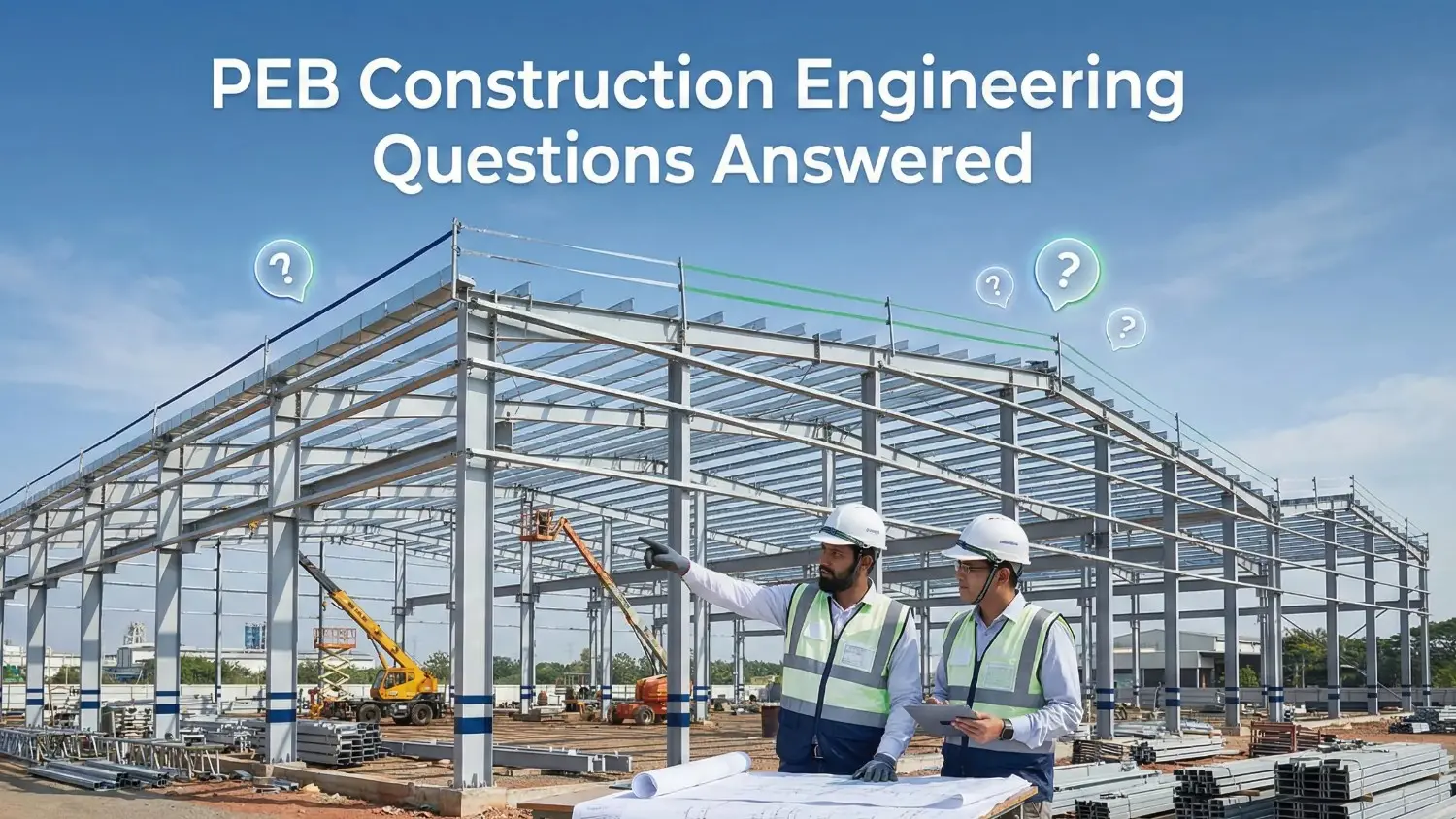
Pre-engineered buildings have become the construction method of choice for warehouses, manufacturing facilities, commercial structures, and industrial infrastructure across South India. However, businesses planning PEB structures often face numerous questions about engineering specifications, material selection, performance characteristics, and long-term durability.
Top 23 PEB Questions With Expert Answers
1. What is a PEB structure?
A pre-engineered building refers to a steel structure designed through computer-aided engineering, fabricated under controlled factory conditions, and assembled on-site using bolted connections. Unlike conventional construction built entirely on-site, PEB components are manufactured to precise specifications before delivery, ensuring dimensional accuracy and faster installation.
The engineering process optimizes material usage by calculating exact load requirements for each structural member, resulting in efficient designs that use less steel while maintaining superior strength.
2. Why choose pre-engineered steel buildings instead of RCC construction?
Pre-engineered steel offers several advantages over reinforced cement concrete:
- Construction speed: Steel structures install 40-60% faster because components arrive fabricated and ready for assembly, eliminating curing time required for concrete.
- Clear span capability: Steel frames achieve wider column-free spans, maximizing usable interior space without structural obstructions.
- Cost efficiency: Optimized designs reduce material quantities, and faster construction lowers labor costs and allows earlier facility operation.
- Future expansion: Modular steel design permits additions and modifications that would be difficult or impossible with rigid concrete structures.
- Foundation requirements: Lighter steel loads reduce foundation costs compared to heavier concrete structures.
These factors make steel particularly attractive for industrial and commercial applications where speed, flexibility, and cost control matter most.
3. Which steel grade is best for PEB construction?
E350 grade structural steel has become the preferred choice for modern pre-engineered buildings due to its superior performance characteristics.
This high-strength steel grade provides:
- Higher load-bearing capacity allowing longer spans with fewer support columns
- Better stress resistance under heavy equipment loads and roof systems
- Improved durability in demanding industrial environments
- Material optimization achieving required strength with less steel weight
- Enhanced fatigue resistance for structures experiencing dynamic loads
While E250 grade steel still finds use in lighter applications, E350 delivers better long-term value for industrial facilities, warehouses, and heavy-use structures.
4. What is the difference between E250 and E350 steel grades?
The designation numbers refer to minimum yield strength in megapascals (MPa):
- E250 steel yields at 250 MPa, suitable for light to moderate structural applications
- E350 steel yields at 350 MPa, providing approximately 40% higher strength
This strength difference translates to practical benefits:
- Span capability: E350 allows longer distances between columns without increasing member sizes
- Load capacity: Higher strength supports heavier equipment, storage systems, and roof loads
- Member optimization: Achieving required capacity with smaller, lighter sections
- Deflection control: Better stiffness reduces structural movement under load
- Long-term performance: Higher grade steel maintains structural integrity longer under sustained loading
For industrial applications with significant operational loads, E350 represents the engineering standard.
5. How long does a steel building last?
Properly engineered and maintained steel structures deliver service lives of 40-50 years or longer. Several factors influence longevity:
- Protective coatings: Galvanization and paint systems prevent corrosion that would otherwise degrade steel
- Design quality: Proper engineering ensures structures operate within stress limits throughout their service life
- Environmental conditions: Coastal salt exposure and industrial atmospheres require enhanced protection
- Maintenance practices: Regular inspection and coating maintenance preserve structural integrity
- Usage patterns: Operating within design parameters prevents premature fatigue
Many industrial steel buildings constructed in the 1970s and 1980s remain fully operational today, demonstrating steel’s durability when properly specified and maintained.
6. Are PEB buildings suitable for tropical climates?
Steel structures perform excellently in tropical environments when designed with appropriate climate-responsive features:
- Thermal management: Reflective roofing, insulation, and ventilation systems control interior temperatures despite intense solar exposure
- Corrosion protection: Multi-layer coating systems and galvanization resist humidity-accelerated corrosion
- Monsoon readiness: Proper roof slopes, drainage capacity, and waterproofing handle heavy seasonal rainfall
- Moisture control: Vapor barriers and condensation management prevent humidity-related problems
South India’s tropical conditions actually favor steel construction because the materials don’t absorb moisture like concrete or suffer biological degradation like wood. Climate-appropriate design ensures comfortable, durable facilities across Tamil Nadu, Kerala, and Karnataka.
7. How fast can a PEB warehouse be constructed?
Pre-engineered warehouse construction typically proceeds 40-60% faster than equivalent conventional building:
- Design phase: 2-3 weeks for engineering and approval drawings
- Fabrication period: 4-6 weeks for component manufacturing
- Site preparation: 2-4 weeks concurrent with fabrication
- Structural erection: 3-6 weeks depending on building size
- Envelope completion: 2-4 weeks for roofing, walls, and accessories
- Total timeline: 3-5 months from design approval to operational facility
A 20,000 square foot warehouse might require 4-6 months as a PEB versus 8-12 months using traditional construction. This timeline advantage allows businesses to begin operations months earlier, generating revenue while competitors are still building.
8. Can PEB structures support mezzanine floors?
Steel framing provides ideal support for mezzanine floor systems. The structural characteristics that make steel suitable for mezzanines include:
- Load distribution capability: Steel columns and beams efficiently transfer mezzanine loads to foundations
- Connection flexibility: Bolted systems allow mezzanine attachment without compromising primary structure
- Span optimization: Long-span steel frames accommodate mezzanine layouts without interfering columns
- Future modifications: Mezzanines can be added to existing buildings or expanded as needs change
- Engineering integration: When planned during initial design, mezzanine loads are incorporated into structural calculations
Many warehouses, manufacturing facilities, and commercial buildings integrate mezzanine floors to maximize vertical space utilization without building footprint expansion.
9. What industries use prefabricated warehouses?
Steel warehouse structures serve diverse industrial sectors:
- Manufacturing operations requiring large open spaces for production equipment and material flow
- Logistics and distribution needing flexible storage configurations and efficient loading dock access
- E-commerce fulfillment organizing multi-level inventory storage and order processing zones
- Cold storage facilities where insulated steel structures maintain temperature-controlled environments
- Automotive sectors housing vehicle storage, parts inventory, and service operations
- Pharmaceutical manufacturing meeting cleanroom and environmental control requirements
- Food processing providing sanitary, easily cleaned spaces meeting health regulations
- Retail distribution supporting inventory management for multiple store locations
The common thread across these applications is the need for large, unobstructed spaces with flexibility for changing operational requirements.
10. Are steel structures earthquake resistant?
Steel buildings offer excellent seismic performance due to material properties and structural characteristics:
- Ductility: Steel flexes under seismic forces rather than cracking like brittle materials, absorbing earthquake energy through controlled deformation
- Strength-to-weight ratio: Lighter structures generate lower seismic forces proportional to building mass
- Connection design: Properly engineered bolted and welded connections maintain integrity during ground movement
- Frame flexibility: Portal frame systems accommodate lateral displacement without structural failure
- Predictable behavior: Steel’s consistent material properties allow accurate seismic response modeling
Engineers design steel structures for specific seismic zones, incorporating appropriate bracing, connection capacity, and foundation anchorage to meet regional earthquake requirements. South India experiences moderate seismic activity, and properly designed steel buildings provide excellent safety margins.
11. Do PEB buildings rust easily?
Unprotected steel will corrode when exposed to moisture and oxygen, but modern protective systems prevent rust effectively:
- Hot-dip galvanization coats steel with zinc layers that corrode sacrificially before underlying steel is affected, providing decades of protection
- Multi-layer paint systems create moisture barriers with primer, intermediate, and finish coats offering redundant protection
- Powder coating fuses polymer layers to steel surfaces, creating durable, weather-resistant finishes
- Maintenance protocols addressing minor coating damage before corrosion develops preserve long-term integrity
With proper protective systems, steel structures in tropical climates routinely serve 40-50 years with minimal corrosion issues. The key is specifying appropriate coatings during construction and maintaining them through periodic inspection.
12. What roof types are used in steel buildings?
Steel building systems accommodate various roof configurations based on functional requirements:
- Gable roofs with symmetrical slopes from center ridge provide efficient water drainage and traditional appearance
- Single-slope roofs drain to one side, offering simpler construction for smaller buildings or additions
- Multi-span roofs cover wide buildings using multiple parallel roof sections supported by intermediate columns
- Curved arch roofs create distinctive appearances while efficiently distributing loads through compression
- Monitor roofs incorporate raised center sections with vertical glazing for natural lighting
- Sawtooth roofs use multiple angled sections oriented for controlled natural lighting
Roof selection depends on building width, aesthetic preferences, natural lighting needs, and drainage requirements.
13. Can PEB structures be expanded later?
Modular steel design specifically facilitates future expansion:
- End wall removal allows longitudinal building extension without disrupting existing operations
- Side expansions add width through new bays connected to existing structural frames
- Vertical additions incorporate second floors or mezzanines using existing columns as support
- Auxiliary structures attach to main buildings for specialized functions
- Engineering provisions in initial design can anticipate future expansion by sizing foundations and connections appropriately
This expandability represents a significant advantage over concrete construction, where additions often require complex structural modifications and may be economically impractical.
14. How much load can steel structures hold?
Load capacity depends on multiple engineering factors:
- Structural design calculating member sizes, connection capacity, and bracing requirements for specified loads
- Span distances where longer spans between columns require stronger members to prevent excessive deflection
- Steel grade with higher-strength materials supporting greater loads in equivalent member sizes
- Load types distinguishing between dead loads (permanent weight), live loads (variable operational loads), and dynamic loads (moving equipment)
- Safety factors incorporating engineering margins beyond calculated minimums
- Industrial warehouses might support 500-1000 kg/m² floor loads, while specialized facilities handling heavy machinery could be designed for 2000+ kg/m². Engineers calculate precise capacities during design based on intended building use.
15. What maintenance is required for steel structures?
Steel building maintenance focuses on preserving protective systems:
- Coating inspection every 6-12 months identifying chips, scratches, or wear requiring touch-up
- Fastener verification checking bolt tightness annually, particularly on connections subject to vibration
- Drainage maintenance ensuring gutters and downspouts remain clear and functional
- Sealant inspection verifying panel joints and penetrations remain weathertight
- Structural monitoring watching for deflection, corrosion, or unusual conditions
- Major recoating typically needed every 10-15 years depending on environment and coating quality
Compared to concrete buildings requiring crack repair and spalling correction, or wood structures facing rot and pest damage, steel maintenance proves straightforward and cost-effective.
16. Are PEB buildings eco-friendly?
Steel construction offers several environmental advantages:
- Material recyclability: Steel remains fully recyclable without property degradation, and most structural steel contains significant recycled content
- Construction waste reduction: Precise fabrication minimizes material waste compared to site-cut and site-mixed materials
- Energy efficiency: Proper insulation and design create high-performance building envelopes reducing operational energy
- Disassembly and reuse: Bolted steel structures can be dismantled and relocated rather than demolished
- Smaller foundations: Lighter steel loads reduce concrete requirements for foundations
- Faster construction: Shortened timelines reduce construction site environmental impact
These factors contribute to steel’s growing recognition as a sustainable construction material when lifecycle impacts are considered.
17. What is the clear span advantage?
Clear span refers to unobstructed interior space without supporting columns:
- Operational flexibility allowing equipment placement, storage configuration, and workflow optimization without working around columns
- Future adaptability permitting operational changes without structural constraints
- Space efficiency maximizing usable floor area since no space is lost to interior columns
- Equipment movement facilitating material handling and production flow throughout facility
- Visual openness creating better supervision sight lines and more pleasant working environments
Steel efficiently achieves clear spans of 30-40 meters in standard applications, with specialized designs reaching 60+ meters. This capability proves particularly valuable in warehousing, manufacturing, and large retail spaces.
18. Can steel buildings handle heavy machinery loads?
Steel structures excel at supporting industrial equipment when properly engineered:
- Point load capacity accommodating concentrated equipment weights through reinforced connections and support members
- Dynamic load resistance handling vibration and impact from operating machinery
- Crane system integration supporting overhead material handling with runway beams designed for moving loads
- Floor system design creating slabs or mezzanines capable of supporting specific equipment weights
- Foundation coordination ensuring soil and concrete systems transfer loads safely
Engineers analyze equipment specifications during design, incorporating necessary structural provisions for safe, long-term support of all installed machinery.
19. What is the cost per square foot for PEB construction?
Pre-engineered building costs vary based on specifications:
- Basic warehouse structures: ₹450-600 per square foot for simple storage buildings
- Industrial facilities: ₹600-800 per square foot with insulation, specialized roofing, and accessories
- Climate-controlled buildings: ₹800-1000+ per square foot for cold storage or cleanroom applications
- Multi-story structures: ₹900-1200 per square foot incorporating mezzanines or second floors
Cost factors include:
- Building dimensions and height
- Span distances and structural requirements
- Insulation specifications and thermal performance
- Crane systems or heavy equipment provisions
- Cladding materials and appearance requirements
- Site conditions and foundation needs
- Location and accessibility
These costs typically run 15-30% lower than equivalent conventional construction while delivering faster completion.
20. How are PEB components manufactured?
Factory fabrication ensures quality and precision:
- Engineering design using structural analysis software to optimize every component
- Computer-controlled cutting achieving exact dimensions for all steel members
- Automated welding creating consistent, high-quality connections
- Shot blasting preparing surfaces for coating application
- Coating application in controlled environments ensuring complete coverage
- Quality inspection verifying dimensions, connections, and finishes meet specifications
- Protective packaging for transport to construction sites
This controlled manufacturing process delivers superior quality compared to site fabrication subject to weather, variable worker skill, and limited equipment.
21. What is the wind resistance of steel structures?
Engineered steel frames resist high winds through several mechanisms:
- Rigid frame design where columns and rafters work together distributing lateral forces
- Bracing systems providing additional lateral force resistance through diagonal members
- Connection strength with bolted and welded joints designed for wind-induced forces
- Foundation anchorage transferring wind loads safely into ground through properly designed bases
- Envelope integrity ensuring panels remain attached during high-wind events
Engineers design for regional wind zones, incorporating appropriate safety factors. Coastal areas and cyclone-prone regions receive enhanced specifications ensuring structural integrity during severe weather events.
22. Why is proper design important for PEB buildings?
Engineering quality determines building performance:
- Load optimization balancing structural capacity with material efficiency
- Connection design ensuring forces transfer safely between all members
- Deflection control limiting movement that could affect operations or building envelope
- Code compliance meeting safety standards and regulatory requirements
- Operational suitability accommodating specific industry needs and equipment
- Long-term durability preventing premature failure through proper material selection
Poor design results in over-engineered (expensive) or under-engineered (dangerous) structures. Professional engineering ensures buildings perform safely while controlling costs.
23. Who should design a PEB building?
Pre-engineered building design requires specialized expertise:
- Structural engineers understanding steel behavior, connection design, and load analysis
- PEB experience applying knowledge of pre-engineered systems and components
- Regional familiarity incorporating local climate, seismic, and wind conditions
- Industry knowledge addressing specific operational requirements for different facility types
- Project management coordinating design, fabrication, and construction processes
Experienced steel structure construction specialists combine engineering capability with practical building knowledge, ensuring designs translate successfully into operational facilities.
Featured Snippet Optimization Section
Best steel grade for PEB structures
E350 steel is commonly recommended for pre-engineered buildings because it provides higher strength, better durability, and wider span capability than standard structural steel grades. This high-strength material supports heavier loads while using less steel weight, delivering both performance and cost efficiency for industrial applications.
How long do pre-engineered buildings last
Properly maintained pre-engineered steel buildings last 40-50 years or longer. Service life depends on protective coating quality, environmental conditions, and maintenance practices. Many industrial steel structures from the 1970s remain fully operational today, demonstrating excellent long-term durability when engineering and maintenance standards are met.
PEB construction timeline
Pre-engineered building construction typically requires 3-5 months from design approval to operational facility, proceeding 40-60% faster than conventional construction. Timeline includes 2-3 weeks design, 4-6 weeks fabrication, and 5-10 weeks site work depending on building size and complexity.
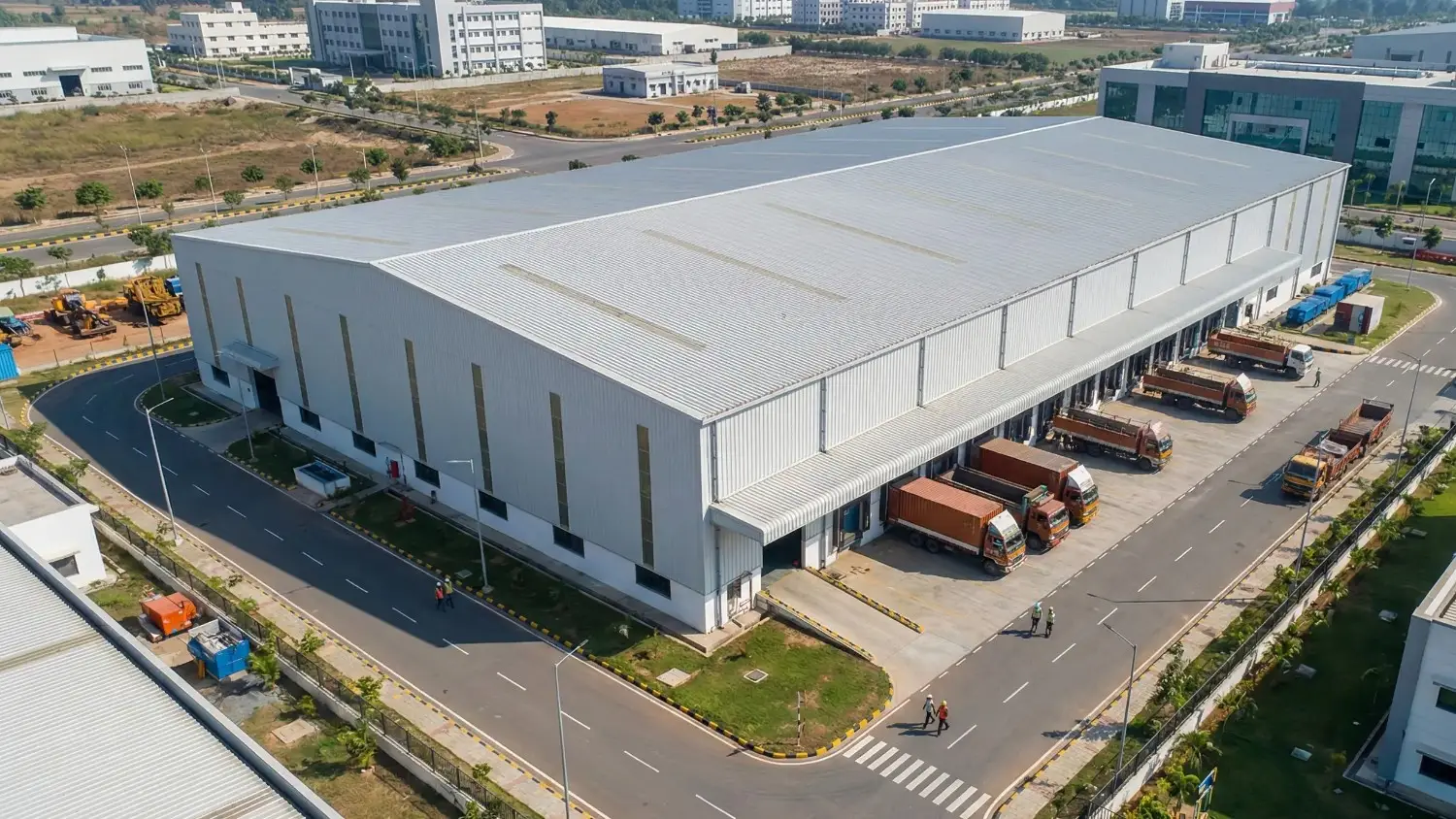
When you partner with Pentaumec, you get:
✓ E350 high-strength steel as standard for all critical structural members.
✓ Advanced PEB design engineering using modern structural analysis software.
✓ Faster project delivery through efficient fabrication and installation processes.
✓ Long-life steel structures built to perform for decades with minimal maintenance.
✓ Cost-efficient solutions that balance upfront investment with lifecycle value.
✓ Trusted across South India with hundreds of completed projects.
Closing Authority Section
Modern pre-engineered steel buildings are engineered for large clear spans, heavy roof loads, machinery installation, and long service life. Understanding these 23 fundamental questions helps businesses make informed decisions when planning industrial facilities, warehouses, or commercial structures.
The key to successful pre-engineered building projects lies in working with experienced professionals who combine structural engineering expertise with practical construction knowledge. Proper design, quality materials, and professional execution ensure facilities that perform reliably for decades while meeting operational requirements and controlling costs.
For businesses across South India planning steel structure projects, partnering with qualified engineering and construction teams ensures facilities deliver expected performance from initial occupancy through entire operational lifespans.